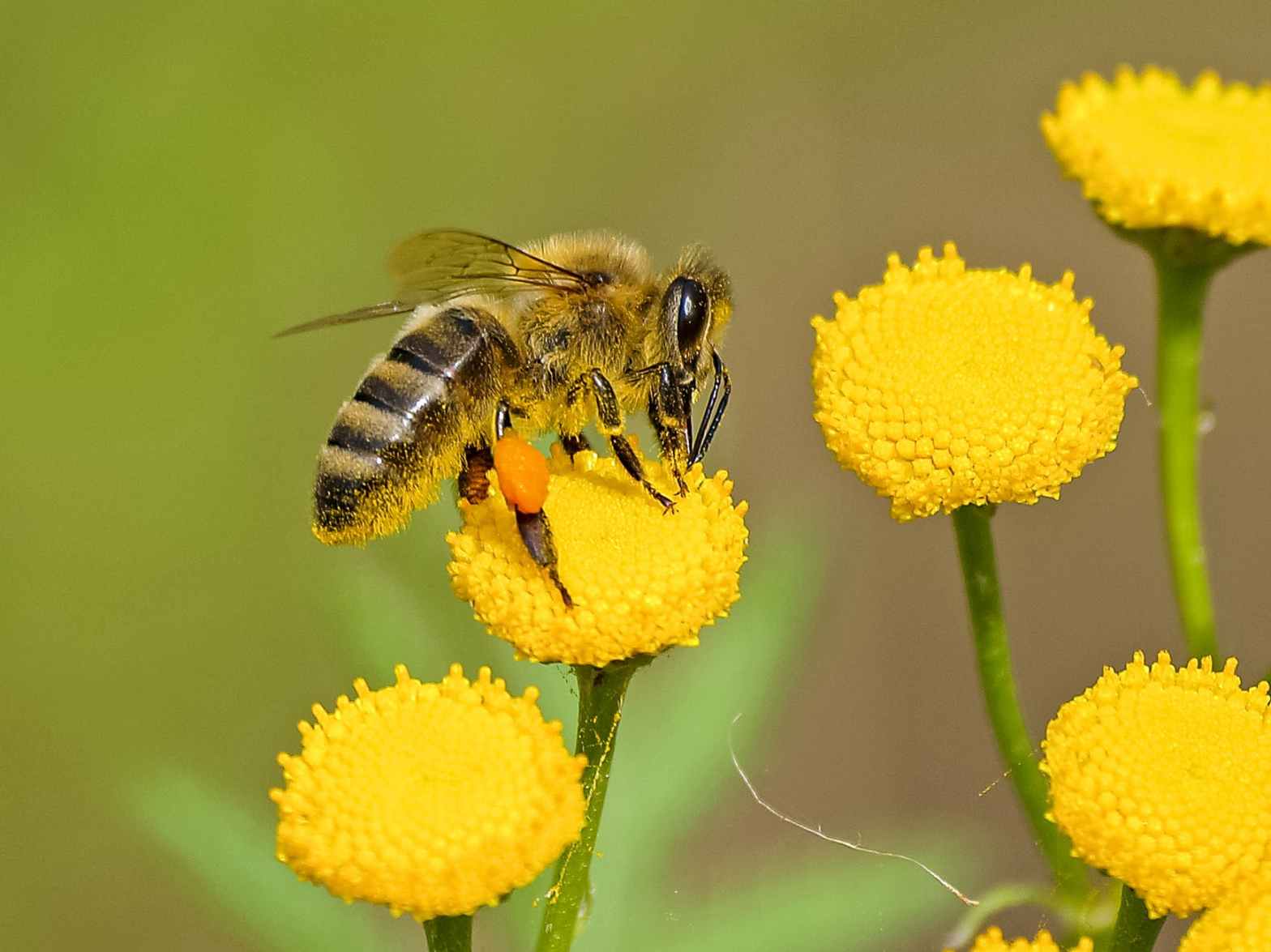
Pollination is the process of transfer of pollen grains from anther of one plant to stigma of either same plant or different plant. Different plants follow the different modes of pollination. It can be done by biotic as well as abiotic mode. If talking about the biotic mode then honeybees are the major pollinators on this planet.
Around 40% of the pollination is carried out by the honeybees. Let us understand briefly how it occurs and what is it’s importance in our ecosystem. Pollination is actually first step of plants towards fertilisation. In this very first step, the gametes are brought together to form zygote, which further leads to the formation of seed. Anther of plant produces the pollen grains which are very tiny but in huge count. Now, when honeybees sit on the plant specially on it’s anther then those pollens get attached to the body of honeybee. In this way, when honeybee will sit on the next female plant then those pollens will be detected by the plant. Then, after the pollen pistil interaction, zygote will be formed. So, this is a brief phenomenon of pollination carried out by honeybees.
Honeybees are attracted by the colorful petals of plant. This is actually the way how plants attract the pollinators. In return of pollination, they provide them nectar and nutritious pollens as food. Plants and honeybees have a very important relation.
From here, we can consider the role of one species in the existence of other species. One scientist said that if honeybees would become extinct then indirectly it would impact the human species also. This is because if pollination would not occur then plants would not be produced and thus we cannot survive. So, we should never try to harm any species, if one species is in danger of extinction then it can imbalance the whole ecosystem.
THANK YOU EVERYONE.
 Power of words